
No-code and low-code development and automation platforms are gaining traction around the world, so what is the future of no-code technology and what are the trends and prognoses for this technology?
What is no-code and low-code technology?
First, a little about no-code technology. No-code technology refers to technology and tools that allow users to build applications/projects including process automation and workflow optimization using graphical user interfaces (GUI) without the need to write code.
These tasks can be performed using pre-built templates.
A no-code platform emerges from no-code technology. It is software that allows to create these applications, integrations between programs etc., without the use of code or with little code.
And these platforms allow non-technical people, sometimes called citizen developers, to build systems to optimize workflows and processes, whether for personal or for professional use.
Adoption of No-Code Technologies
The adoption of no-code and low-code platforms is growing across all industries, including marketing, finance, retail, manufacturing, and healthcare. These platforms enable businesses to develop applications and automate processes without extensive coding knowledge, leading to faster time-to-market and reduced development costs.
Integration with Emerging Technologies
One of the key factors pushing the use of no-code platforms is the rapid evolution in technologies such as artificial intelligence (AI), machine learning (ML), and robotic process automation (RPA), and their integration to provide more advanced automation capabilities. This integration allows companies and entrepreneurs to automate many of the processes that take time and energy to run in a conventional way.
Growth Patterns for No-Code Technologies
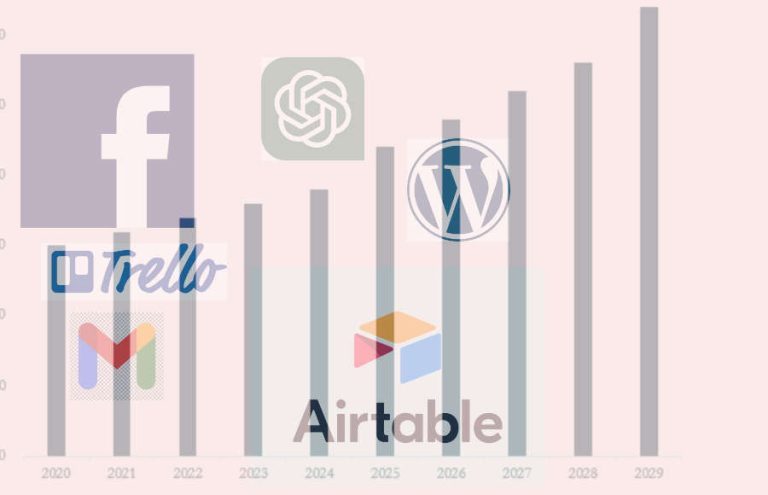
According to the global research and advisory firm Gartner, the low-code technologies registered a revenue of USD 18b in 2021 and will jump to USD 32 billion this year.
Gartner includes no-code, low-code, business process automation (BPA), and RPA technologies and tools in its list.
A recent study by another global consulting firm, KPMG, found out that more than 31-percent of corporate decision makers around the world integrate some sort of low-code technology as part of their technology stack. Interestingly, African and Asian decision makers are more inclined towards using low-code stacks as part of their strategies than their European and American counterparts.
The Future for No-Code Technologies
Low and no-code stacks are here to stay. Companies, particularly small and medium-scale businesses, will increasingly look towards these technologies for cost-efficient and customized solutions.
Gartner says that the revenue of these technologies will increase to USD65 billion by 2027. In other words, it will double from the expected revenue of 2024.